
What’s Happened So Far
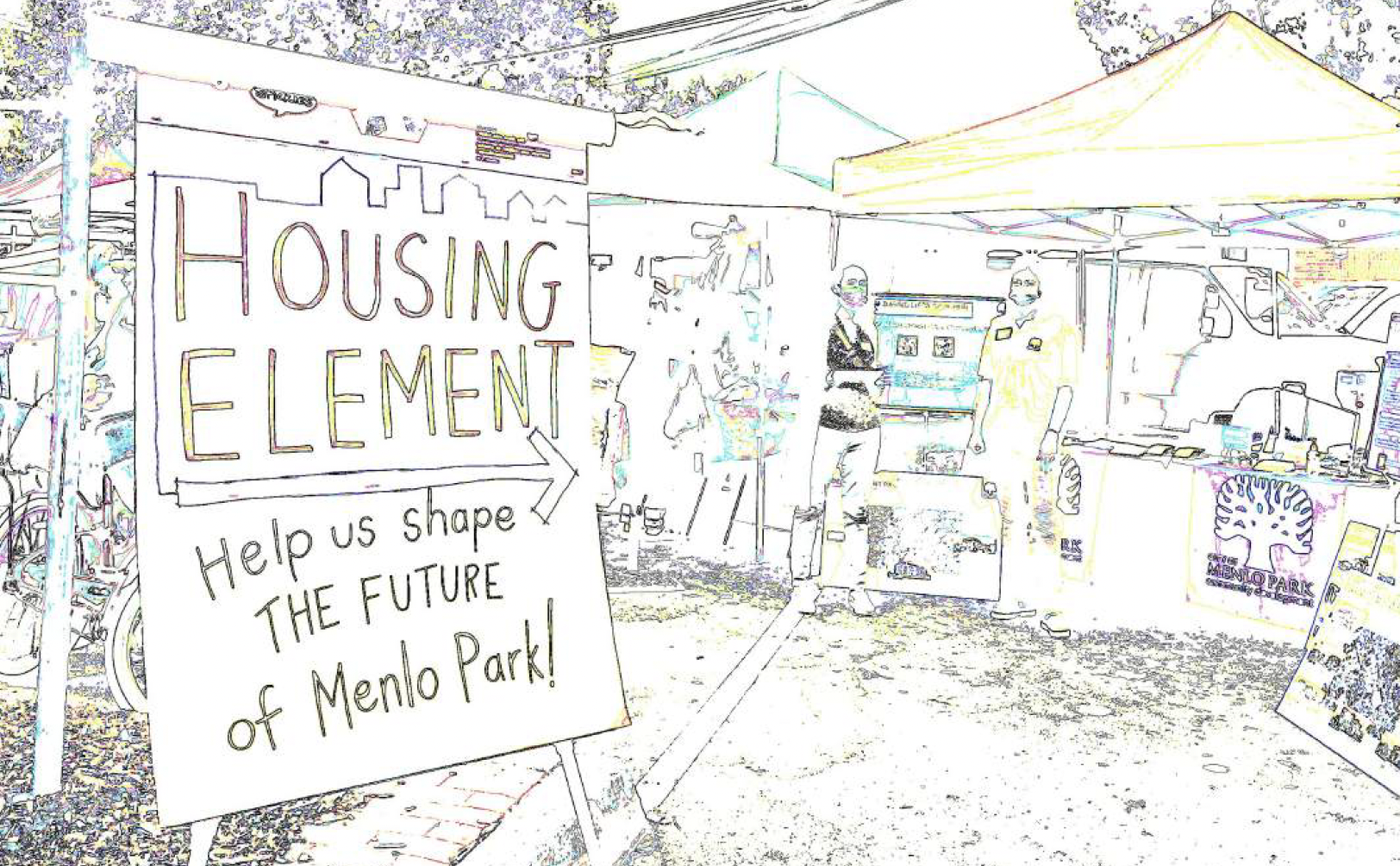
1. In December 2023, Menlo Park’s Housing Element was adopted. The 1,400 page document included a few pages designating the downtown parking lots as potential sites to meet the state-mandated housing allocation (RHNA). Very few residents were aware of this designation.
2. In August 2024,City staff, led by Principal Planner Tom Smith, recommended that the City prioritize the redevelopment of Parking Plazas 1, 2, & 3 for affordable housing. In this plan, the three lots north of Santa Cruz Avenue (comprising 556 spaces) would be used for a minimum of 345 units for low income residents.
Typical restrictions relating to density, height, and parking would be waived because it’s affordable housing near the train station. Buildings as tall as 10 stories, with no residential parking spaces legally required.
No studies had been conducted to assess the potential impact on traffic, congestion, and infrastructure.
No good suggestions were made for replacement parking. A multi-level parking structure was mentioned, but with no plans for funding, location, or timeline. Parking lots are already near capacity, and many people who shop in downtown Menlo do so specifically because they don’t have to deal with parking garages.
Little thought was given to the congestion, decrease in parking accessibility, and years of construction that could devastate our businesses and the jobs they provide.
Alternative locations for affordable housing were not adequately considered, with city officials believing that housing in the parking lots would be good for “the vibrancy of downtown.”
3. On Nov. 19th, City Council planned to vote on declaring the parking lots as “exempt surplus land” (a required legal step to begin development). However, the overwhelming turnout of residents, businesses, and downtown property owners opposing the plan led Council to postpone the vote till Jan. 14th and direct staff to conduct more public outreach.
4. On Jan. 13th, a statement of oppositionby112 businesses located adjacent to the parking plazas was submitted to Council.
5. Competing petitions were done. Menlo Together, an advocacy group which has been working on this issue for many years, did a petition in favor of the plan. (345 signatures on Jan. 14). Save Downtown Menlo, a loose collection of residents and business owners which coalesced after the Nov. 19th meeting, did a petition against the plan. (2,900 signatures on Jan. 14.)
6. At the Jan. 14 Council meeting, Council Chambers were overflowing with people, with many left standing out in the cold. The vast majority of the audience opposed the housing plan. Nonetheless, Council voted to continue the process by issuing an RFQ (Request for Qualifications) to solicit credentials and designs from prospective developers. Council stopped short of declaring the parking lots as “exempt surplus land”, a step which would need to be done before selecting a developer. Council stressed that issuing the RFQ does not commit them to development, but is needed in order to have something specific to decide upon.
7. At the Jan. 28 Council meeting, public comment was filled with speakers reiterating the desire for alternative sites to be considered. Mayor Combs suggested that the RFQ for the downtown be paused, but other councilmembers disagreed, saying that the RFQ is important for information gathering and should not be delayed. However, Council did approve a motion by Councilmember Schmidt for a staff report explaining why the downtown parking lots were our Housing Element’s only City-owned opportunity sites.
8. A special March 4, City Council meeting was held to go over the staff report reviewing the previous evaluations of City-owned sites for housing. According to the report, the Civic Center was eliminated from consideration due to “active civic facilities” and a desire to protect city parkland (even though the Civic Center parking lots are neither civic facilities nor parkland).
Once again, residents expressed strong opposition to the use of the downtown parking lots and asked for other sites to be explored. Mayor Combs wanted to ask staff to further explore the feasibility of City-owned sites, but he received no support from the other councilmembers, who wanted to wait to see what the developers submit in response to the RFQ.
9. On March 22, the results of the annual City Priorities Survey were released by the City Manager’s Office. When asked “Do you have additional input on priorities for Menlo Park?” 126 of the 544 respondents (23%) expressed opposition to the use the downtown parking lots for housing. (while 13 responses, or 2%, expressed support for it.) You can read all the responses starting on page 12 of this staff report or see a summary on pages 14-25 of this presentation.
10. On April 2, the City announced that it received seven submittals from development teams in response to the RFQ. They are here.
11. On April 14th, the attorneys for Save Downtown Menlo filed a lawsuit in the San Mateo County Superior Court.
12. On May 15th, residents filed a Notice of Intent to Circulate a Petition for our Citizens’ Initiative - a ballot measure that would require a public vote before repurposing the parking plazas.
13. On June 3rd, Council decided to have staff draft an RFP (Request for Proposal) from developers - despite the fact 94% of the 141 public comments indicated opposition to plan, as shown in the staff report.
14. On June 3rd, Save Downtown Menlo began collecting signatures for our Citizens’ Initiative. To qualify for the ballot, we must collect signatures from at least 10% of Menlo Park’s registered voters by this November.
15. On August 4th, Save Downtown Menlo announced that it has collected a sufficient number of signatures, but would keep collecting them to show depth of public support.
16. On August 23rd, Save Downtown Menlo released its Alternative Sites page, identifying some viable alternatives to the downtown parking lots.
17. On August 26, the City Council approved the RFP, but not before downgrading the requirement to replace the parking spaces to be simply a “priority.” Also, principal planner Tom Smith reviewed our list of alternative sites, and gave no reasons why they were not viable.
18. On Sept. 15, the City of Menlo Park issued a Request for Proposals (RFP) to seek development of housing on downtown Parking Plazas 1, 2 and 3. The submission deadline is Dec. 15, 2025.
19. On Sept. 29, Save Downtown Menlo pauses its lawsuit, until and unless the City takes a final action.
20. On Oct. 10,residents submitted the petition signatures for their Downtown Parking Plazas Initiative. The County counted a total of 3,928 signatures, and then began a process of examining them. They examined 2,760 random signatures, at which point they stopped examining because from that they were able to reach 2,200 valid signatures (5% over the minimum threshold of 2,104) - which is what the County considers a comfortable margin. Their examination of the 2,760 random samples resulted in a validity rate of 80%. At that rate, had they examined all 3,928 signatures, there would have been about 3,130 valid signatures — 15% of Menlo Park’s voting population (only 10% is required to qualify the initiative.)
21. 400 emails were sent by Menlo residents to City Council in the days prior to their Nov. 4 City Council meeting, asking Council to adopt the Downtown Parking Plazas Ordinance that was proposed in our Citizens Initiative.
22. On Nov. 4, Council Council delayed their decision on whether to adopt the ordinance or put it on a future ballot. Instead, Council commissioned a $165,000 study by M-Group - the same consulting firm that managed the process that originally led do the downtown parking lots being part of the housing plan in the first place. By requesting the study, Council postponed their decision till the December 2nd meeting. See this article.
23. On Nov. 26, the report by M-Group was released. The report defended M-Group's original analysis and recommendations.
24. On Dec. 2nd, City Council voted unanimously to put our Citizens Initiative onto the November, 2026 ballot!
25. On Dec. 15, 3 developers submitted proposals for massive housing complexes lots 1, 2, and 3. In his newsletter, Mayor Combs said, “These proposals represent important data points for residents to use in informing their vote in November … I don’t think the city council should take any additional actions to move the project forward until the voters have spoken.”
26. On Feb. 10, City staff issued a tentative timeline for evaluating the developer proposals. The schedule proposes presentations in March/April, Council selection of a developer in May, and consideration of a Surplus Land Act resolution in the summer. View the discussion here.
27. On June 2, City Council held a study session during which developers admitted that replacing the public parking spaces would require tens of millions of dollars of City contributions. Council decided to commission an outside financial analysis of the proposals, which will delay the process 2-3 months.
28. On July 14, City Council received this update from staff on the City's progress toward meeting its Regional Housing Needs Allocation (RHNA). The update described changes to projected housing capacity in the Housing Element, which “currently exceeds the City's RHNA in every income category.” There was no discussion from Council upon receiving the report. The report also included a calendar showing that in September Council will review the financial analyses of the proposals, with consideration of a Surplus Land Act declaration 30-60 days later.
29. On Sept. 24, 2026, City staff released an independent financial analysis by Strategic Economics of the three proposals to develop housing on downtown Parking Plazas 1, 2, and 3. The analysis found funding gaps ranging from $19 million to $45 million, even though the City would provide the land to developers for a nominal fee. As the consultant concluded, “the cost of the replacement parking is having a significant impact on all three development projects’ feasibility.” The report suggested several ways to close the gaps, including reducing the number of replacement parking spaces, charging for parking, imposing fees on downtown businesses and property owners, or raising taxes. None of the three proposals demonstrated how the promised replacement parking could be fully funded without additional assistance.
In Summary …

In 2025, we had to say no.
When residents and business owners learned of the plan to convert three parking plazas to housing, they filled the City Council chambers and sent hundreds of emails asking the City to pursue other options.
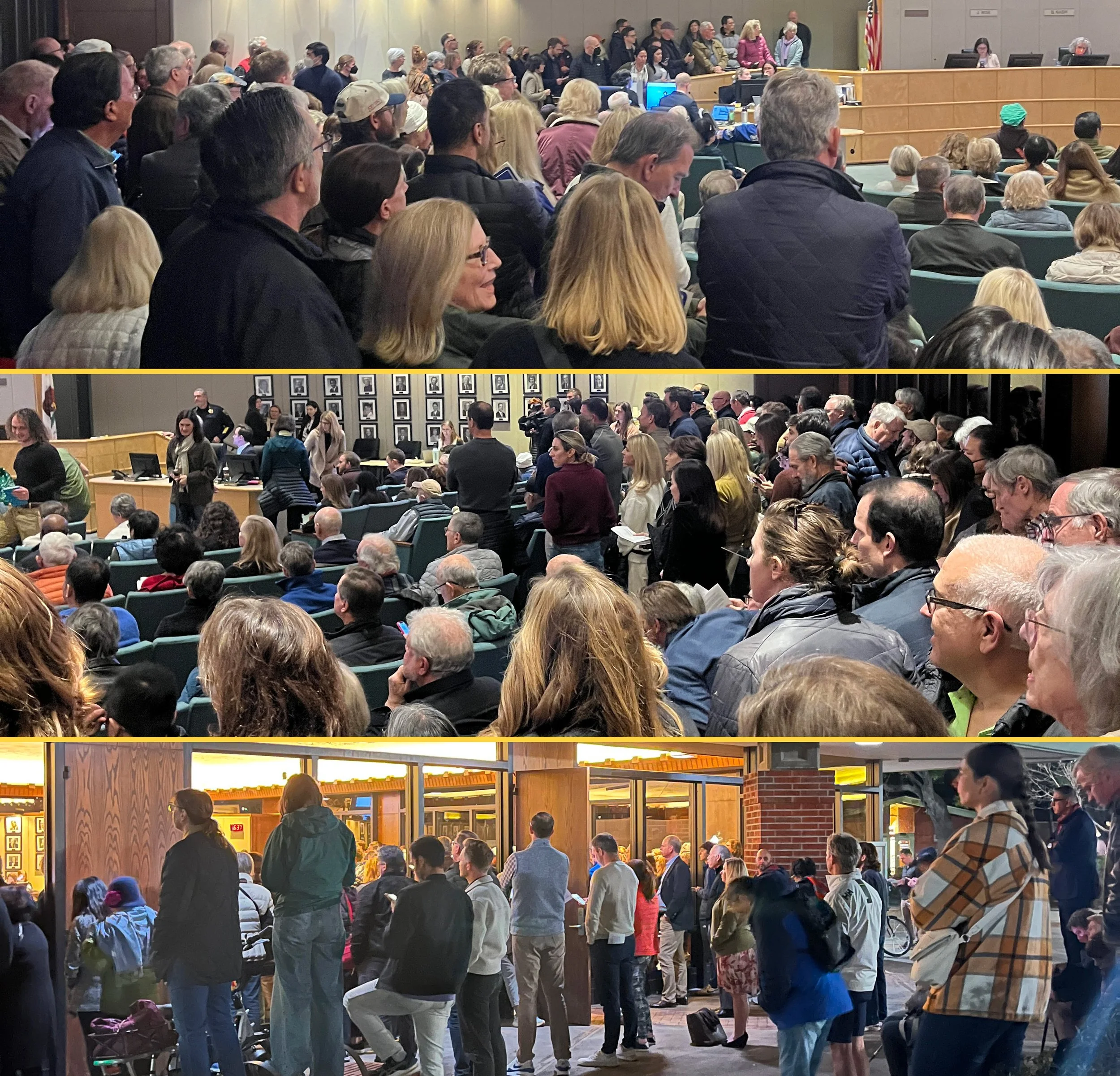
Menlo Park City Council Meeting - Jan. 14, 2025
This decision is too important to be made without community support.
And so a Citizens’ Initiative was written.
15% of Menlo Park voters signed it, far exceeding the required 10% to qualify for the ballot.
In 2026, we get to say YES!
YES! - TO PUBLIC CONSENT
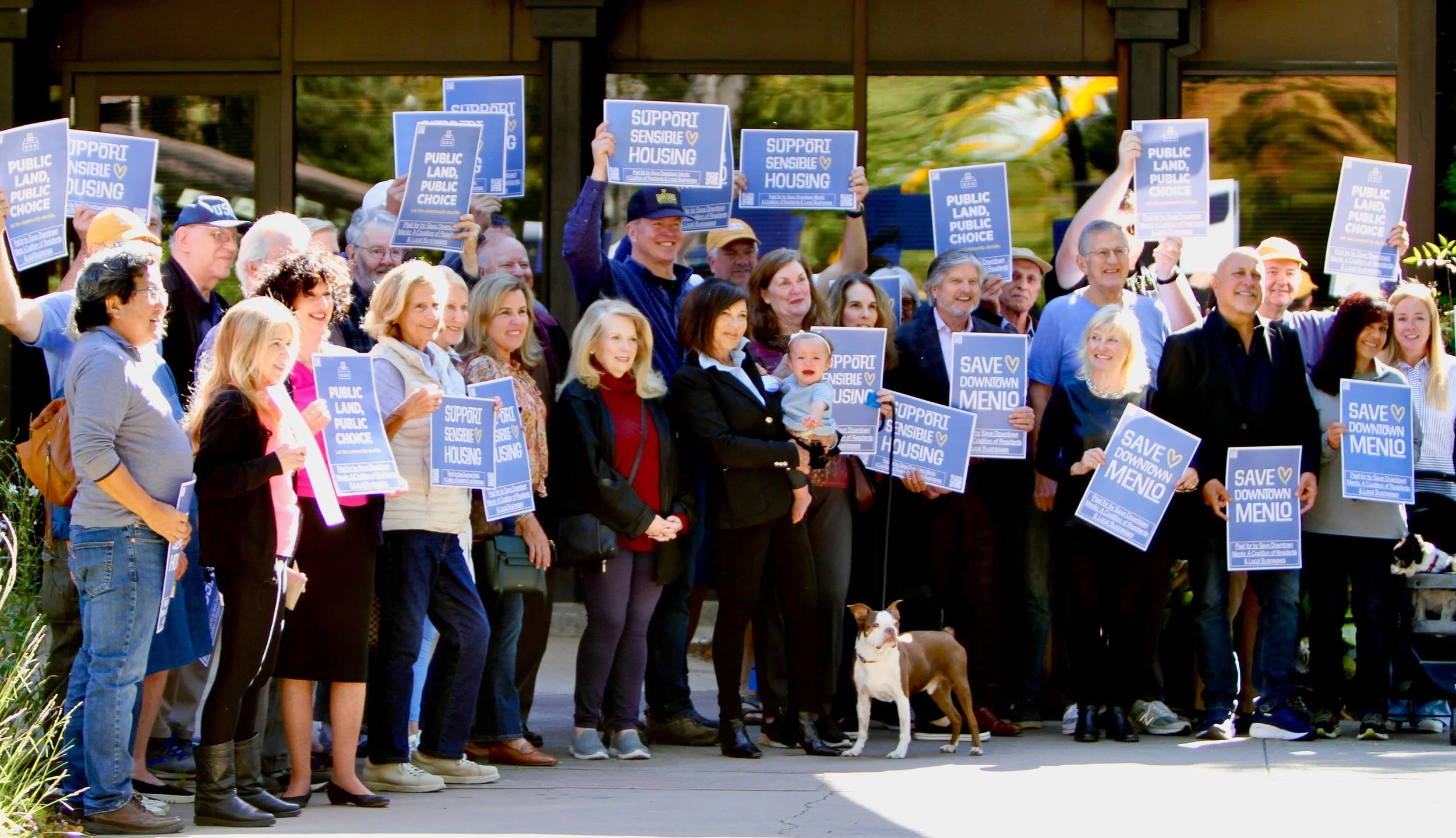
Right now, any 5-person city council can declare the downtown plazas to be “surplus land” and lease them to developers for $1/year. It almost happened, and it still might.
We all hope our city leaders will make sound choices. But a permanent decision of this magnitude must not be made without true public consent. And that requires a public vote.
YES! - TO A THRIVING DOWNTOWN
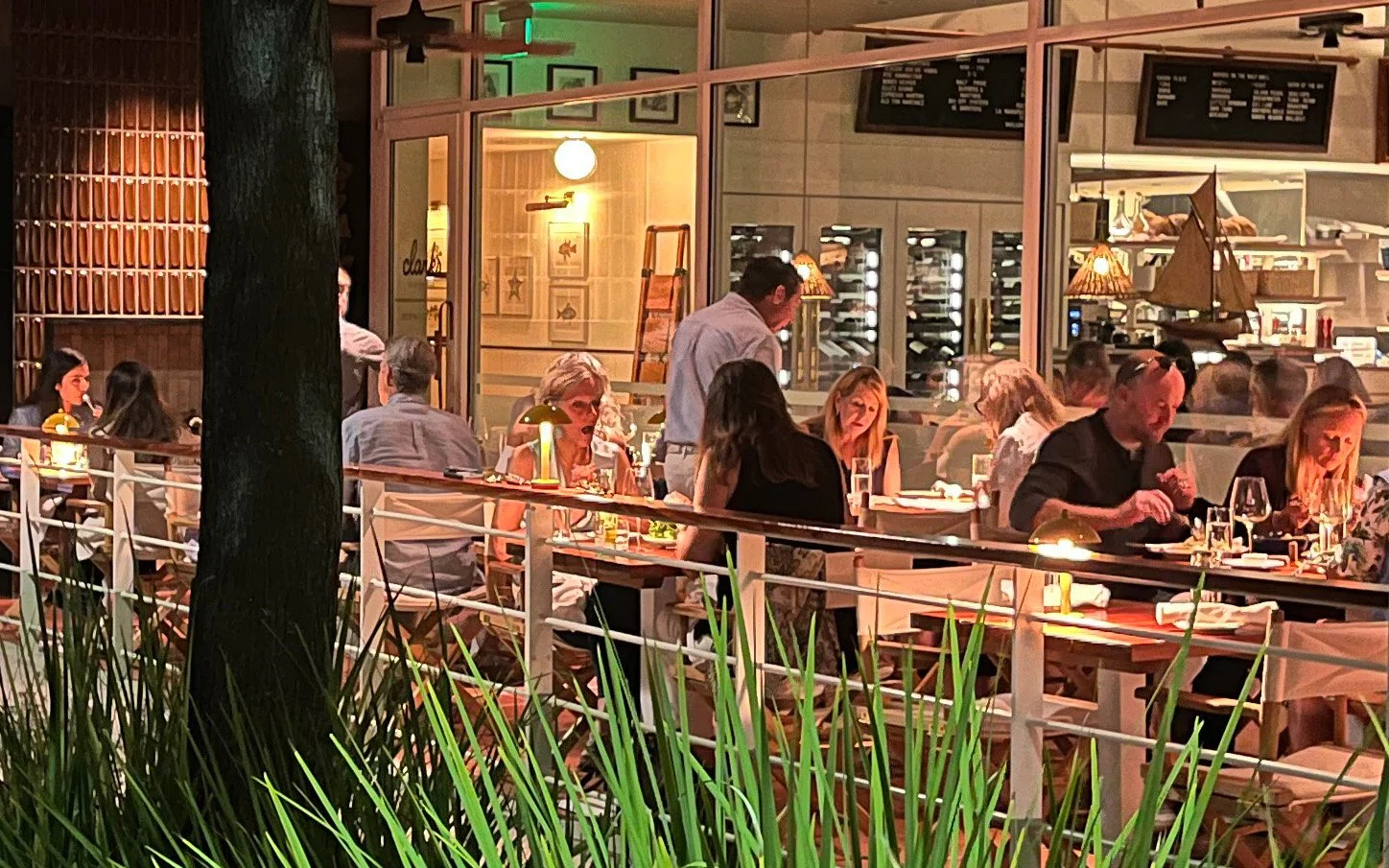
We love our downtown - both what it is, and what it can be.
Whether you adore our long-time shopkeepers, or relish the prospect of new venues, all of it depends on convenient parking.
The very prospect of losing this vital parking is already having consequences. Existing businesses are not renewing leases, and new businesses are choosing other locations. Over 130 downtown businesses issued this statement expressing their deep concern about the threat to parking.
Our initiative provides a needed safeguard: it ensures that any permanent change to this critical infrastructure must have broad public support, so we can continue to enjoy a thriving downtown - one that businesses want to invest in.
YES! - TO BETTER ALTERNATIVES
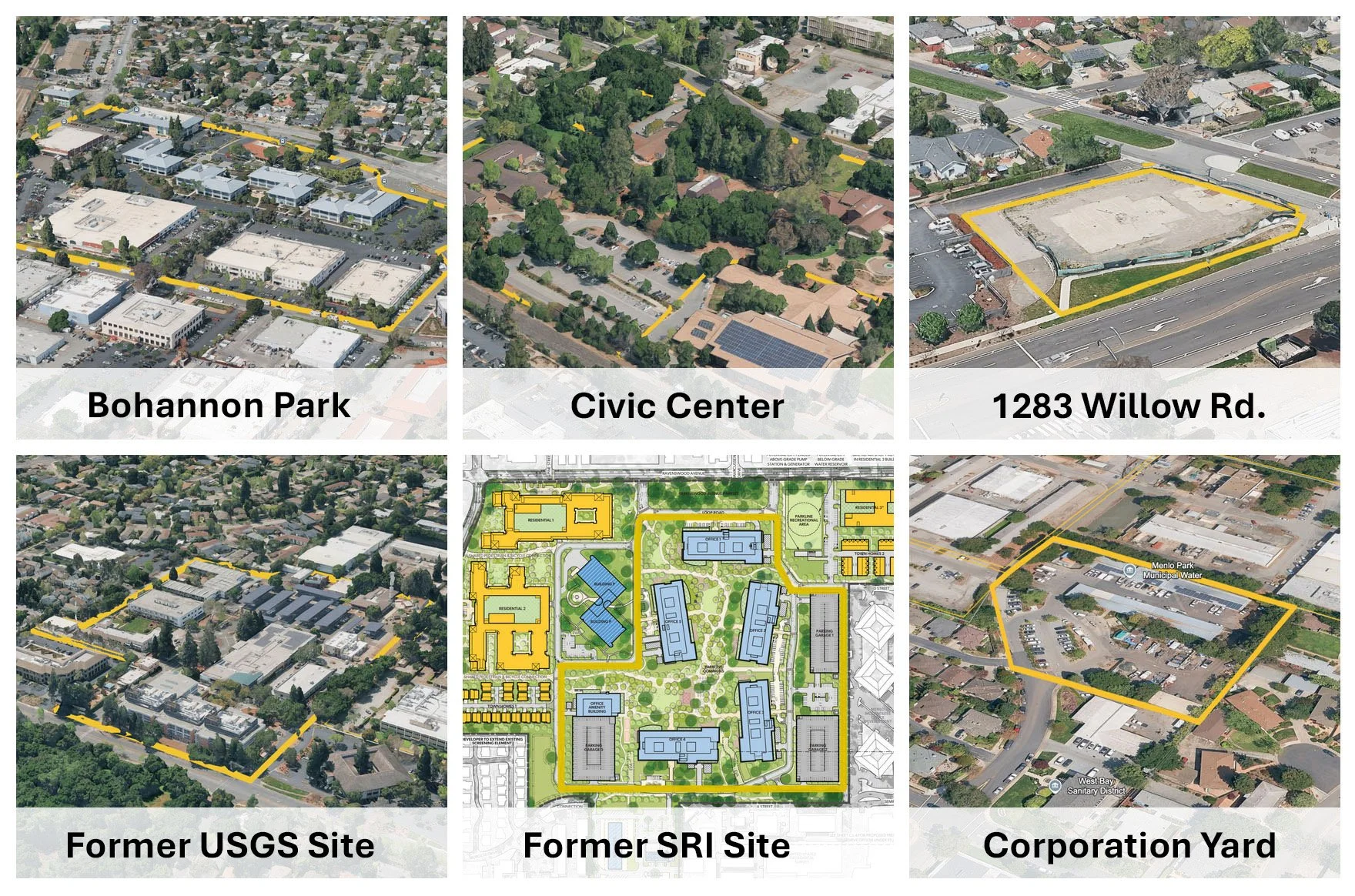
Putting large apartment buildings into narrow, commercial parking lots is fraught with problems. There are better alternatives - sites appropriate for residential use, with better access and proper infrastructure. We do not need to depend on the parking plazas to comply with our housing obligations - we can pivot to a better path.
The question is not whether we need more housing. The question is whether the downtown parking lots are the right place for it. Our Citizens’ Initiative trusts the people of Menlo Park to make that decision.
Let’s Do This Right
San Mateo easily amended their Housing Element. We can too. Click the above video to watch a one-minute summary.